Close

Member Login

Invalid username or password.
Incorrect Login. Please try again.

Not a member?

Sign up and join a community that's passionate about exploring the world of photography.

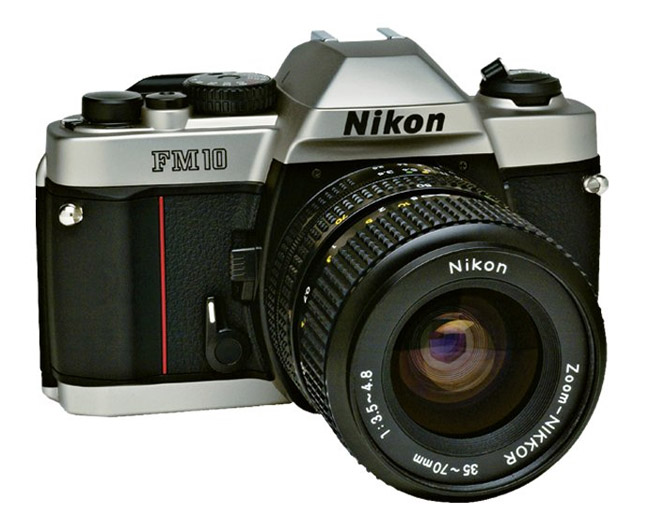
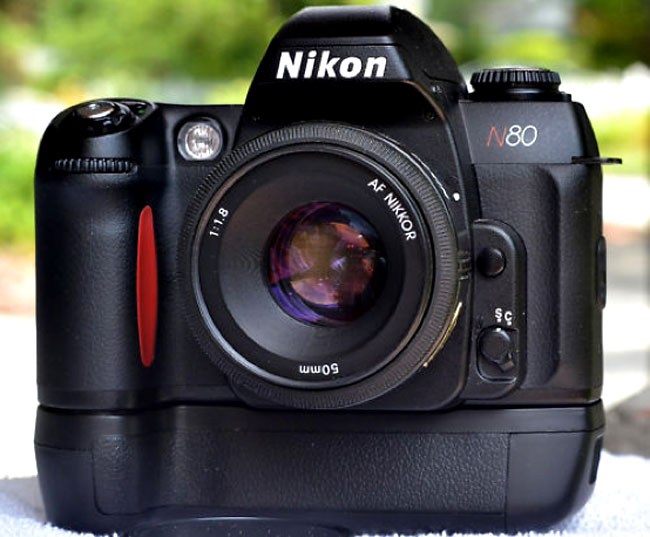
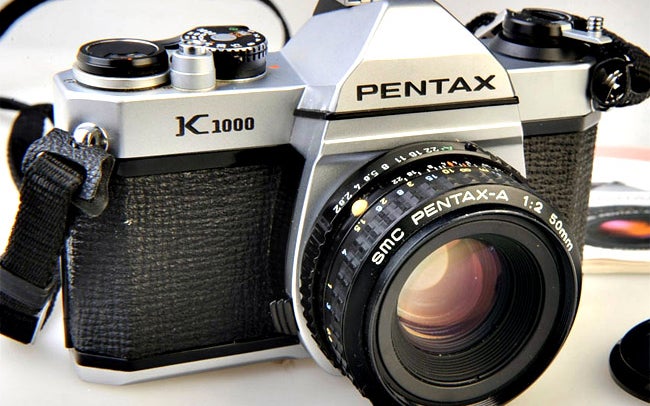
12 Film Cameras Worth Buying Right Now

First, the comments need to be trolled for spam. (How did the spam get past your new login process?)

Second, regarding the Pentax 67, a great camera, under what algebra does one conclude that "with the 6x7 format, you get about 50% more usable negative than a 6x6 (3,850 square mm vs. 2,508 square mm)"? Do you mean about 50% more than a 6x4.5?

0 Good Comment? yes no

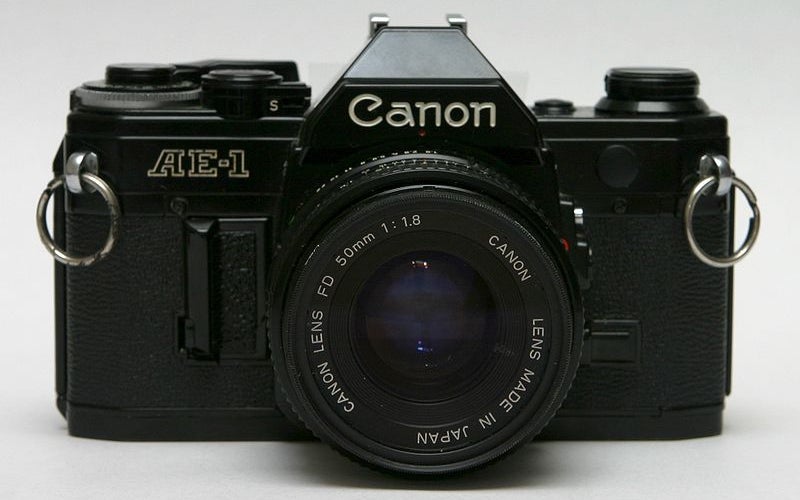
With all due respects to Ms. Nikiti, it's truly hard to understand how she can include the venerable AE-1 from Canon and not the X-700 from Minolta as one of the 12 cameras worth buying right now ...Both fine cameras with excellent OEM lenses of exceptional quality...But the X-700 introduced in 1981 was available in the United States until the year 2000...Nearly TWO DECADES of production (as compared to 7 years for the AE-1)...And while it offered Aperature Priority and full manual control, it also offered a fully automatic Program Mode for point-and shoot-exposure convenience...As European Camera of the year in 1981, 30 years later it is available in tremendous numbers at incrediblly low prices with an amazing choice of lenses.

0 Good Comment? yes no

I've used a number of film cameras over the years. I still have a weak spot for my father's Leica (from the 1950's), one of which I still have and would love to have cleaned, etc. and use again a bit. I also really liked my Koncia Auto S2 and a Konica SLR that I had. But my favorite is the last one I got, the EOS 10S, bought back in 1990. I haven't used it lately, but when I look back at the shots I got with it, in particular with some nice FUJI films, I'm amazed at how good the shots look. Digital is a lot easier; I always had problems getting good processing of film, but when I used the 10S well, even in ultra low light, it always delivered.

One of the things I liked about it - it had nice support in the US from Chuck Westfall at Canon. He put together a great guide for using Canon flash units which was available on request at the time. BTW, at last check he was still at Canon - I still pester him once in a while.

0 Good Comment? yes no

I agree - this list is problematic.
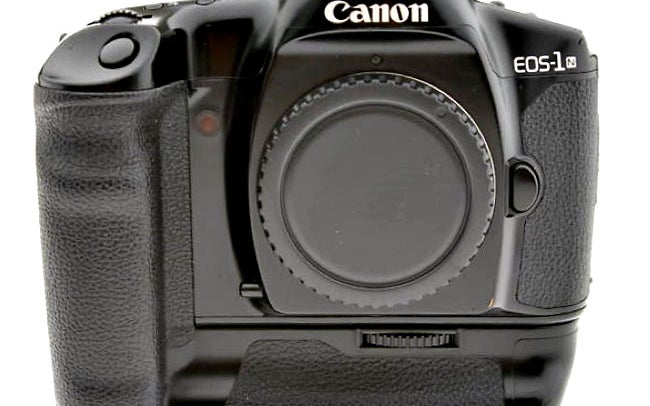
With extremes like the Canon AE-1 on one hand and the EOS-1N on the other,
I would certainly include excellent middle-of-the-road models like the EOS A2 - equivalent to today's 5DMII - a truly awesome camera, even in todays standards, being sold for less than $100.

My digital camera guide - http://www.eyalg.com

0 Good Comment? yes no

The X-700 and the EOS A2 are both great calls. I had an A2 as well.

Keep the suggestions coming!

0 Good Comment? yes no

Yes you can get some great film cameras and lenses for a fraction of their original price today.
Just as a matter of curiosity I looked at a Nikon FM3a when it came out, but then decided it had everything I wanted in a camera, nothing more or less. Well made and well thought out. I bought it and have enjoyed it since.

0 Good Comment? yes no

Well, I just don't understand why you would want to buy a film camera. You can probably get great deals on buggy whips and lightning rods but they too are obsolete.

0 Good Comment? yes no

Shooting with film is a decidedly different experience than shooting digital. Certainly, it's not always practical, but it can help improve parts of your photography skill set. Film can also give you a very unique look that's hard to achieve with digital.

And let's not forget just how sweet medium format negatives are. A good scan on an MF negative is a truly beautiful thing.

0 Good Comment? yes no

Digital is so convenient, but shooting on film still has its advantages. A lot of pros and serious amateurs still use film for specific reasons, such as film's superior latitude and tonal range - retaining detail in both the highlights and shadows. Film images just have a certain look that may be more desirable at times. It's another tool in your bag. However as digital keeps improving, the advantages of film are dwindling. And I agree with Shoraczek about the scanned image of a medium format neg. I know pros who prefer to shoot film and then scan the neg for postproduction, as that is the best way to obtain a desired end result.

0 Good Comment? yes no

What about the Mamiya RB67? It is a great camera to use, and it is back to basics if you use a finder that does not have any electronics. The kits on KEH are very reasonable, and the cameras are indestructible.

0 Good Comment? yes no

I shot weddings with an RB67 and a big Metz 60CT flash 25 years ago. 90 & 180mm lenses, and three 220 backs. Also a spare body, because they were actually NOT indestructible. Great shots, but sore back & shoulders at the end of the day...I don't miss that aspect of shooting medium format.

0 Good Comment? yes no

You can achieve very high quality results with old film cameras by developing the negatives and then digitizing them with a dedicated photo scanner at highest resolution. The dynamic range can be amazing and the images have the "feel" of film. It does require you to shoot more carefully since multiple exposures can become expensive.

0 Good Comment? yes no

Should have 35mm & 120 separately. There are a fair amount of premium cameras that were not mentioned eg. Canon T90 (The Tank) as well as the A1.

0 Good Comment? yes no

The impetus for this article appears to be: DSLRs are marginally more expensive right now (but certainly not more than, say, a few hundred dollars more).

I would ask anyone considering this as valid reason to take into account the running cost of film and processing. Roll of 36: $6; processing: at least another $6, probably more like $12-18 at a decent processor. That's 30 cents a shot (minimum). Doesn't sound like much? Consider that, before I got rid of my D70, I shot over 70,000 frames over a few years (up to about 50K with the D300). That would have cost me $21,000 to process. And, personally, I learned a lot being about to take that many frames and make that many mistakes (I would submit that we learn best from the shots that don't work out).

Even assuming that you could get away with 5 cents a shot (let's assume you are bulk rolling your own black and white film, processing yourself, etc.), the cost of shooting 70,000 frames is prohibitive.

(This does not mean that would suggest a shotgunning, bracket-every-shot, don't "previsualize" approach. This is possible in digital, because of the economy of the technology, but it is not ideal.)

If cost is the criteria, this recent uptick in prices should not deter anyone from getting a DSLR. Sentimentality might lead you back to film, but economy cannot. And this is from a former owner of a Canon A-1, Nikon F, Nikon N90, Rollie 2 1/4, and 4x5 view camera.

0 Good Comment? yes no

This is a silly, sentimental idea. Unless you are "into" film for film's sake alone, the price of DSLRs does not justify this. Not only is film expensive, it is harder to find, chemicals are likewise niche items and processing is hard to find -- again, unless you are into film for its sake alone. And Kodachrome is dead and gone. Just as roll and sheet film superseeded glass plates, digital imagery is here to stay -- so is Japan and its camera industry will reemerge. I am not a kid: I still have my dad's Retina IIIC, my first Nikon -- an S and 3 lenses. But those are for memories and sentimentality. The Fs, FEs, FE2s, F3 and F5 are all long gone, with only the pro glass surviving from the F5 and currently doing yeoman duty on my D700s.

0 Good Comment? yes no

Political niceties apart... this is a pretty dumb premise: buy antiquated cameras and switch to a vanishing expensive medium. Jeez. What's next? 56k modems? Cars without traction control? Film is dead for a great reason: cost and inconvenience. Digital can now easily reproduce film quality in a second. Cameras today are way superior to 20 years ago. The digital ship sailed out 10 years ago.

0 Good Comment? yes no

To be clear, the impetus for this article wasn't to dissuade people from buying DSLRs. We love DSLRs (just look around the site...there's plenty of evidence). But, there are a lot of people who have wanted to try film for various reasons. Maybe they used to shoot film all the time, but stopped. Maybe they're young and have NEVER tried shooting film. Maybe they just really like the look of a scanned negative. Maybe some people just want to hone their skills without the luxury of being able to review their images on a screen.

We won't be writing any articles called, "Throw your DSLR in the garbage and get a film camera" in the near future. But, film photographers are just that, photographers, and if we can serve them in some way, we're glad to do it.

Whatever you do, keep shooting!

0 Good Comment? yes no

Film cameras aren't antiquated. They are a different tool for a different job. Cars replaced horses, but horses are still superior in some situations.
Personally, I think every one should spend some time with film and paper in a traditional darkroom when they are learning. I thank God everyday that that is how I learned some of the solid techniques I have since adapted to digital.
Having said that.... I have tried to pull out my old medium format film cameras and cannot justify the extra expenditure in both money and time to get similar results (don't get me started on going back into the darkroom). I also wonder how much less heavy metal pollution there is now that amateur photographers aren't pouring chemicals down the drain.

0 Good Comment? yes no

Whilst I agree with the comments above, re- cost effectiveness of film v's digital (it was the argument I used with the 'finance dept.' to justify a DSLR). On a trip to Japan last year, I saw more film cameras being used by the average punter, than I have here (in Oz) for the last 10 years. So I'm not sure I would say 'film is dead' just yet.

0 Good Comment? yes no

Recently I purchased a Mercury 11, 35mm camera that takes half-frame size pictures... This was the first camera I ever had and also one of the best ... Super quality... This camera has been in storage for OVER fifty years....

Now, heres my question... Does ANYONE know where I can have the film developed, prints and slides processed ? ( or even buy the half-size slide mounts ) ? I hate too think that this camera
is just going to sit on a self for the rest of its life...

Appreciate any info....

0 Good Comment? yes no

Comments (19)

Write a comment

First, the comments need to be trolled for spam. (How did the spam get past your new login process?)

Second, regarding the Pentax 67, a great camera, under what algebra does one conclude that "with the 6x7 format, you get about 50% more usable negative than a 6x6 (3,850 square mm vs. 2,508 square mm)"? Do you mean about 50% more than a 6x4.5?

0 Good Comment? yes no

With all due respects to Ms. Nikiti, it's truly hard to understand how she can include the venerable AE-1 from Canon and not the X-700 from Minolta as one of the 12 cameras worth buying right now ...Both fine cameras with excellent OEM lenses of exceptional quality...But the X-700 introduced in 1981 was available in the United States until the year 2000...Nearly TWO DECADES of production (as compared to 7 years for the AE-1)...And while it offered Aperature Priority and full manual control, it also offered a fully automatic Program Mode for point-and shoot-exposure convenience...As European Camera of the year in 1981, 30 years later it is available in tremendous numbers at incrediblly low prices with an amazing choice of lenses.

0 Good Comment? yes no

I've used a number of film cameras over the years. I still have a weak spot for my father's Leica (from the 1950's), one of which I still have and would love to have cleaned, etc. and use again a bit. I also really liked my Koncia Auto S2 and a Konica SLR that I had. But my favorite is the last one I got, the EOS 10S, bought back in 1990. I haven't used it lately, but when I look back at the shots I got with it, in particular with some nice FUJI films, I'm amazed at how good the shots look. Digital is a lot easier; I always had problems getting good processing of film, but when I used the 10S well, even in ultra low light, it always delivered.

One of the things I liked about it - it had nice support in the US from Chuck Westfall at Canon. He put together a great guide for using Canon flash units which was available on request at the time. BTW, at last check he was still at Canon - I still pester him once in a while.

0 Good Comment? yes no

I agree - this list is problematic.
With extremes like the Canon AE-1 on one hand and the EOS-1N on the other,
I would certainly include excellent middle-of-the-road models like the EOS A2 - equivalent to today's 5DMII - a truly awesome camera, even in todays standards, being sold for less than $100.

My digital camera guide - http://www.eyalg.com

0 Good Comment? yes no

The X-700 and the EOS A2 are both great calls. I had an A2 as well.

Keep the suggestions coming!

0 Good Comment? yes no

Yes you can get some great film cameras and lenses for a fraction of their original price today.
Just as a matter of curiosity I looked at a Nikon FM3a when it came out, but then decided it had everything I wanted in a camera, nothing more or less. Well made and well thought out. I bought it and have enjoyed it since.

0 Good Comment? yes no

Well, I just don't understand why you would want to buy a film camera. You can probably get great deals on buggy whips and lightning rods but they too are obsolete.

0 Good Comment? yes no

Shooting with film is a decidedly different experience than shooting digital. Certainly, it's not always practical, but it can help improve parts of your photography skill set. Film can also give you a very unique look that's hard to achieve with digital.

And let's not forget just how sweet medium format negatives are. A good scan on an MF negative is a truly beautiful thing.

0 Good Comment? yes no

Digital is so convenient, but shooting on film still has its advantages. A lot of pros and serious amateurs still use film for specific reasons, such as film's superior latitude and tonal range - retaining detail in both the highlights and shadows. Film images just have a certain look that may be more desirable at times. It's another tool in your bag. However as digital keeps improving, the advantages of film are dwindling. And I agree with Shoraczek about the scanned image of a medium format neg. I know pros who prefer to shoot film and then scan the neg for postproduction, as that is the best way to obtain a desired end result.

0 Good Comment? yes no

What about the Mamiya RB67? It is a great camera to use, and it is back to basics if you use a finder that does not have any electronics. The kits on KEH are very reasonable, and the cameras are indestructible.

0 Good Comment? yes no

I shot weddings with an RB67 and a big Metz 60CT flash 25 years ago. 90 & 180mm lenses, and three 220 backs. Also a spare body, because they were actually NOT indestructible. Great shots, but sore back & shoulders at the end of the day...I don't miss that aspect of shooting medium format.

0 Good Comment? yes no

You can achieve very high quality results with old film cameras by developing the negatives and then digitizing them with a dedicated photo scanner at highest resolution. The dynamic range can be amazing and the images have the "feel" of film. It does require you to shoot more carefully since multiple exposures can become expensive.

0 Good Comment? yes no

Should have 35mm & 120 separately. There are a fair amount of premium cameras that were not mentioned eg. Canon T90 (The Tank) as well as the A1.

0 Good Comment? yes no

The impetus for this article appears to be: DSLRs are marginally more expensive right now (but certainly not more than, say, a few hundred dollars more).

I would ask anyone considering this as valid reason to take into account the running cost of film and processing. Roll of 36: $6; processing: at least another $6, probably more like $12-18 at a decent processor. That's 30 cents a shot (minimum). Doesn't sound like much? Consider that, before I got rid of my D70, I shot over 70,000 frames over a few years (up to about 50K with the D300). That would have cost me $21,000 to process. And, personally, I learned a lot being about to take that many frames and make that many mistakes (I would submit that we learn best from the shots that don't work out).

Even assuming that you could get away with 5 cents a shot (let's assume you are bulk rolling your own black and white film, processing yourself, etc.), the cost of shooting 70,000 frames is prohibitive.

(This does not mean that would suggest a shotgunning, bracket-every-shot, don't "previsualize" approach. This is possible in digital, because of the economy of the technology, but it is not ideal.)

If cost is the criteria, this recent uptick in prices should not deter anyone from getting a DSLR. Sentimentality might lead you back to film, but economy cannot. And this is from a former owner of a Canon A-1, Nikon F, Nikon N90, Rollie 2 1/4, and 4x5 view camera.

0 Good Comment? yes no

This is a silly, sentimental idea. Unless you are "into" film for film's sake alone, the price of DSLRs does not justify this. Not only is film expensive, it is harder to find, chemicals are likewise niche items and processing is hard to find -- again, unless you are into film for its sake alone. And Kodachrome is dead and gone. Just as roll and sheet film superseeded glass plates, digital imagery is here to stay -- so is Japan and its camera industry will reemerge. I am not a kid: I still have my dad's Retina IIIC, my first Nikon -- an S and 3 lenses. But those are for memories and sentimentality. The Fs, FEs, FE2s, F3 and F5 are all long gone, with only the pro glass surviving from the F5 and currently doing yeoman duty on my D700s.

0 Good Comment? yes no

Political niceties apart... this is a pretty dumb premise: buy antiquated cameras and switch to a vanishing expensive medium. Jeez. What's next? 56k modems? Cars without traction control? Film is dead for a great reason: cost and inconvenience. Digital can now easily reproduce film quality in a second. Cameras today are way superior to 20 years ago. The digital ship sailed out 10 years ago.

0 Good Comment? yes no

To be clear, the impetus for this article wasn't to dissuade people from buying DSLRs. We love DSLRs (just look around the site...there's plenty of evidence). But, there are a lot of people who have wanted to try film for various reasons. Maybe they used to shoot film all the time, but stopped. Maybe they're young and have NEVER tried shooting film. Maybe they just really like the look of a scanned negative. Maybe some people just want to hone their skills without the luxury of being able to review their images on a screen.

We won't be writing any articles called, "Throw your DSLR in the garbage and get a film camera" in the near future. But, film photographers are just that, photographers, and if we can serve them in some way, we're glad to do it.

Whatever you do, keep shooting!

0 Good Comment? yes no

Film cameras aren't antiquated. They are a different tool for a different job. Cars replaced horses, but horses are still superior in some situations.
Personally, I think every one should spend some time with film and paper in a traditional darkroom when they are learning. I thank God everyday that that is how I learned some of the solid techniques I have since adapted to digital.
Having said that.... I have tried to pull out my old medium format film cameras and cannot justify the extra expenditure in both money and time to get similar results (don't get me started on going back into the darkroom). I also wonder how much less heavy metal pollution there is now that amateur photographers aren't pouring chemicals down the drain.

0 Good Comment? yes no

Whilst I agree with the comments above, re- cost effectiveness of film v's digital (it was the argument I used with the 'finance dept.' to justify a DSLR). On a trip to Japan last year, I saw more film cameras being used by the average punter, than I have here (in Oz) for the last 10 years. So I'm not sure I would say 'film is dead' just yet.

0 Good Comment? yes no

Recently I purchased a Mercury 11, 35mm camera that takes half-frame size pictures... This was the first camera I ever had and also one of the best ... Super quality... This camera has been in storage for OVER fifty years....

Now, heres my question... Does ANYONE know where I can have the film developed, prints and slides processed ? ( or even buy the half-size slide mounts ) ? I hate too think that this camera
is just going to sit on a self for the rest of its life...

Appreciate any info....

0 Good Comment? yes no
Post a Comment
The content of this field is kept private and will not be shown publicly.
(200 Characters or less)
By submitting this form, you accept the Mollom privacy policy.
All submitted comments are subject to the license terms set forth in our Privacy Policy and Terms of Use