Do Men and Women Take Different Photos?
Can you tell who took this photo?
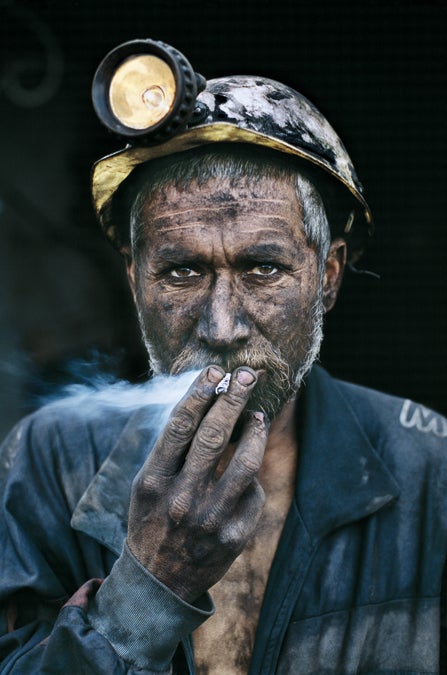
At the International center of Photography in New York last year, Associate Curator Kristen Lubben found herself talking a lot about a timeless subject: the differences between men and women. She was co-curating part of an exhibit of photos of the Spanish Civil War by Robert Capa and Gerda Taro. The two had been lovers and professional partners at that early point in their careers. While Capa went on to become one of the 20th century’s most renowned war photographers, Taro died in 1937 at age 26, after being struck by a tank.
“We had Taro upstairs and Capa downstairs,” says Lubben. “It was an interesting test case for some people-do men and women take different pictures? As I gave tours of the exhibition, I was constantly asked about it.”
Such fascination makes sense. Gender is an endlessly debatable topic. The debate gets fiercer when it turns to boys-versus-girls. And the stakes get higher as more women take up cameras.
Of course, women have always been a force in photography. Yet in recent years, photo programs have seen a steady rise in the number of female students in everything from advertising to art to photojournalism. At top schools such as the Rochester Institute of Technology and the Art Center College of Design in Pasadena, women now outnumber men. But do they take different kinds of pictures?
“The perception of what you’re asking is: Who makes better pictures?” says Dennis Keeley, chair of photography and imaging at the Art Center. “Nobody. Better pictures are made by better photographers. That is not gender-driven, except we have a society that’s gender-divided. In discussing these things, it’s not the answers-it’s the questions.”
THE EYES HAVE IT
Our first question: Do men and women physically see the world differently?
There is some evidence that the answer might be yes.
A report from the Online Journalism Review made a splash in March 2007 when it reported an eye-tracking study that looked at where viewers glanced on a given news page on the web. When presented with an image of a figure, females most often looked at the face, while males focused both on the face and the crotch.
Funny enough for salacious blog posts, but the results may have been onto some serious differences in behavior. In 2000, Life Sciences published a Japanese eye-tracking study that found a marked difference between the gaze of adult men and women. When presented with an image, women looked for longer periods of time at fewer places, while men’s eyes moved more frequently over the image.
Such intriguing results lend themselves to a host of ideas about detail-oriented women lingering patiently over a scene while stimuli-driven men scan it (seeking crotches?) like photographic Terminators.
The problem with such conclusions, though, is that they’re based more on our own preconceptions about sex than on actual evidence. Laurent Itti, associate professor of computer science, psychology, and neuroscience at University of Southern California, notes that, while differences in visual behavior have been demonstrated in other studies, science hasn’t proven what happens physically that creates such differences. “It doesn’t tell you what’s happening in the head,” he says. “It doesn’t tell you why.”
VENUS AND MARS
| Steve McCurry |
| McCurry also shot this portrait of a boy selling oranges in the street of Kabul in 2003. |
Until researchers uncover all the mysteries of the male and female brain, we’re left to our own, decidedly unscientific, observations.
Keeley sees differences in his students’ approaches. “Women-these are generalities-are much more flexible in terms of their imagery. They’re able to appropriate images easier.” His male students, though, often take a technical view, saying, “‘How much equipment can I leverage at this thing? I can light it, frame it, I’ll use the big camera, the big lens.'”
Reid Callanan, director of the Santa Fe Workshops, sees more women than men drawn to fine-art photography. “That’s a realm of emotion and memory. Those parts of ourselves are more easily accessible by women,” he says. “I think women are more self-aware than we men are.”
And Kathleen Hennessy, director of photography at the San Francisco Chronicle, laughs as she recalls a conference at which she was in a group with two male editors: “I started to notice that the men really talked about the physical dimensions of the photograph, the technical aspects, and the composition. One used the word ‘geometry’ all the time, which I’d never heard before. And the women tended to talk about the story and the emotion and the impact. I thought, Well, that’s the difference between men and women, isn’t it?”
This was a common theme in our interviews. But while it seems like just another chapter in the Men are from Mars, Women are from Venus saga, it does get to a larger point. “As you progress through your photographic career and experience, you learn that oftentimes you photograph from your dreams and your memories and your intuition and your background,” says Callanan. “It’s not just the perception through your eyes.”
So, not even the most thorough eye-tracking study could explain the vast motivations and personal background each photographer brings to a scene. Our pictures are inextricably bound up with who we are and how we move through the world. If you believe that men and women experience the world differently, then it follows that they take different kinds of pictures.
FIRING LINE
| Deborah Copaken Kogan |
| Villagers and mujahedeen fighters with their weapons were photographed by Deborah Copaken Kogan in Sanglakh, Afghanistan, in February 1989. |
In search of differences, and similarities, in experience, we looked at a genre long dominated by men: war photography. It isn’t long before familiar ideas about gender emerge.
Veteran conflict photographer and famed National Geographic shooter Steve McCurry, for one, doesn’t think that men and women take different kinds of photos. Yet, he says, “I think the whole macho, act of aggression and war is more of a male thing-I think men are more drawn to going out and playing cowboys and Indians.”
Deborah Copaken Kogan, a war photographer in the late ’80s and early ’90s who wrote the 2000 memoir Shutterbabe: Adventures in Love and War, has changed her mind about the role gender played in her work. “While I was taking the photos, I didn’t think I had a female take on war. I thought I was taking the same pictures as the guy standing next to me.”
But, having recently assembled presentations of her photos, she says, “When I put together my slide carousel, I noticed that they were, for lack of a better word, female. Meaning a lot of what I was fascinated by in war were the children, the women: How does war affect family life? How does war affect the psyche of a child?”
Still, even in a hyper-male environment like combat, traditional ideas of what subjects men and women are drawn to don’t tell the whole story. “With Gerda Taro, there’s a tendency to say, ‘Oh, well, she took great pictures of women and children. Or she was particularly interested in taking pictures of orphanages,'” Lubben says. “I was asked over and over, ‘Was she more sensitive? Did she care more about civilian victims? Was she less likely to be in the thick of battle?’ There’s a presumption that she took more feminine pictures, which I don’t think is borne out by the work.”
Such assumptions imply that women don’t photograph something as dangerous as a battle or that “female” subjects such as women and children count less in war coverage.
But Capa and Taro both took pictures of civilians. And Lubben notes that Taro made a series of morgue photos that are more brutal than any she could recall of Capa’s.
“I’m not saying there aren’t differences between male and female photographers,” she adds. “But I think we need to examine why we imagine there might be, and what attributes we’re all too inclined to ascribe to female photographers even before looking at the work.”
For all the talk of “male” and “female” subjects and approaches, most of the photographers we spoke with see little difference in the kinds of pictures men and women take. More importantly, for each stereotype, plenty of photographers defy it.
GENDER-NEUTRAL
| Brenda Ann Kenneally |
| ****New York City:** Children play with pieces of a broken mirror from a car abandoned on Dodworth Street, Brooklyn, in 1999, where Brenda Ann Kenneally photographed the life of her block.** |
Pulitzer-Prize winning San Francisco Chronicle photojournalist Deanne Fitzmaurice says that, whether you’re a man or a woman, you need a certain set of traits-such as compassion, patience, and perseverance-to build a realtionship with a subject and craft a long-term story.
“Who are the people who are doing that really successfully? Two who come to mind are Brenda Ann Kenneally and Eugene Richards,” she says. “There’s a female and male photographer who are using those skills and personality traits to get the stories they’re getting.”
Photographer Cara Phillips, co-creator of the online exhibition project Women in Photography (www.wipnyc.org), recalls her own education as a perfect example of stereotypes upended. “I studied with Joel Sternfeld-he’s super-conceptual and intellectual, but he approaches everything from an emotional point of view,” she says. “He didn’t believe in taking pictures unless it really, really, really mattered. We never really bothered with the technical. He just expected you to understand what a good picture was and to find your way.”
Pamela Reed and Matthew Rader are a team of art and fashion photographers based in New York. They don’t believe there’s much difference in their individual pictures. In fact, Reed says flatly, “When we get back our photos, you can’t tell which photos Matthew took or I took.”
SUBJECTIVE REALITY
| Eugene Richards |
| **In a shantytown in 1986, Fred-just returned from prison-cries as he greets former girlfriend Rose. Eugene Richards included this photo in his 1987 book, Below the Line: Living Poor in America. |
But pictures aren’t taken in a vacuum. The sex of the photographer matters because subjects react to men and women differently. This doesn’t have anything to do with how the photographer perceives the scene, but it can still have a huge effect on the resulting photograph.
Indeed, Reed points out that female models generally perform differently in front of male photographers than they do in front of female ones. However, the models who work with Reed and Rader are faced with a team that includes both. “I don’t think they know how to respond to that or which role they should play then,” she says.
Adds Rader, “Perhaps that’s why we see our work as asexual, because it gets canceled out.”
Their experience with models underscores the subtle interplay between men and women, photographer and subject. But sometimes there’s nothing subtle about it. The photographer’s gender can be a huge hindrance or help in dealing with people, depending on the situation. And it can absolutely affect the kinds of subjects to whom he or she has access.
Deborah Copaken Kogan recalls assignments in Afghanistan where being a woman “hindered 200 percent” her ability to photograph the mujahedeen. “These guys were radical Muslims, and just the idea of having a woman along with them was totally antithetical to their way of being,” she says. On the flip side, though, she could often go where male photographers weren’t allowed-into homes and refugee camps to photograph women and families.
So do female photographers take pictures of women and children because they are inherently drawn to them as subjects? Or is it because they have better access to them to begin with?
VIVA LA DIFFERENCE!
| Gerda Taro |
| ****War in Europe:** Covering the Spanish Civil War in 1937, Gerda Taro photographed two Republican soldiers carrying another in the Navacerrada Pass.** |
We’re not saying that the gender of the photographer doesn’t play into the picture that emerges. Obviously it does. But it matters in ways that often we can’t predict.
A tapestry of actions and reactions go into the making of a photo. To reduce it to any one thing, even if that thing may be the photographer’s gender, is often just, well, a reduction.
Are women more drawn to narrative and emotion? Maybe, but plenty of men are, too. Are men more drawn to technical, action-centered subjects? Possibly. But for each stereotype, you can come up with examples of photographers who defy them.
| Robert Capa |
| ******Having landed in France with American forces on D-Day in June 1944, Robert Capa photographed captured German soldiers in Calvados, St. Laurent-sur-Mer.****** |
“There certainly is a clichéd female style of photography. And there’s a clichéd tech dude who has 2,700 cameras and only talks about depth of field,” says Cara Phillips. “But within photography, there are so many people that fit and defy stereotypes, that going there doesn’t get you anywhere. Ultimately I really don’t think that it’s important.”
After all, in the end the goal is simply to make a unique, effective-even great-photograph. Says Dennis Keeley, “Photography has that quality of honesty in it that doesn’t quit. And it goes beyond the maker of the picture.”