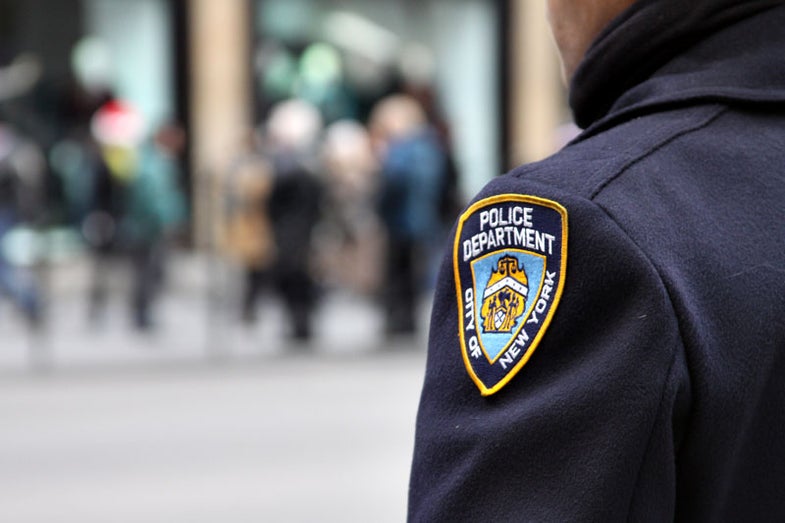
It's common knowledge in the photography community here in the US that police activity taking place in the public domain is fair game to be photographed assuming you aren’t getting in the way or crossing police lines. Unfortunately, that scene doesn't always play out as it should.
The latest incident involves a Harlem woman who has recently filed a lawsuit against the city of New York for $24 million regarding events occurring in October of 2009 in which she was allegedly beat up and arrested by police officers after they realized she was photographing an arrest with her camera-phone.
Specifics relating to the event are somewhat fuzzy, and will likely remain so until the case goes to court (if it makes it that far). But, it seems like the frequency with which we hear about photographers (or at least, people with cameras) clashing with law enforcement is increasing all the time. We don't like it. What are your thoughts on this? Have you ever run into similar issues while shooting images of police officers on active duty? Please share.
From: Gothamist.com
I feel photographers have the right to take photos in the public domain, but there are times where your common sense has to come into play. For this example, did that woman really need to be taking photos of that arrest? Was it absolutely necessary? Did she have intentions of selling it to a newspaper or just posting a funny comment about on facebook?
As a photographer I strongly stress to other photographers to use your common sense and not take the risk of taking photos like this when you dont have a purpose or reason for taking it.
Just my 2 cents
Of course she should have been able to take the photos, or a movie, without police interference so long as she kept quiet, did not get in the police zone and did not threaten the police. It is one of the most important tools we have to watch and oversee what the police are doing in our name. In Michigan we have a Sargent up for charges because his criminal report on a suspect did not match what the dash cam in his own car recorded. There are bad police just as there are bad people everywhere.
Common sense says that you can record these moments legally and whether necessary or not it is allowed under the law and the only reason for officers to be upset is if they are doing something illegal. This is true whether she was going to sell it or not.
I cannot believe how many people are willing to just give up their rights or try to excuse an attack on a citizen because it might upset the officer to get his photo taken. What reason would the officer care unless they were doing something they should not have been doing in the first place. On the other hand, if the photographer injected herself into the arrest by taunting. threatening or otherwise creating a situation where it could cause others to get riled up or to impeded the officers ability to make the arrest then she deserved to be arrested.
If the story is true the city should cough up the money and the officers should be fired.
sandiegophotographer,
You state "common sense has to come into play. For this example, did that woman really need to be taking photos of that arrest? Was it absolutely necessary? Did she have intentions of selling it to a newspaper or just posting a funny comment about on facebook?" and then state: "to use your common sense and not take the risk of taking photos like this when you dont have a purpose or reason for taking it."
So my question is who gets to decide what is "Common sense", what is "Absolutely necessary", what are appropriate intentions, i.e. selling to a newspaper, or posting on facebook? You? The District Attorney? The Police Chief? The Mayor? The Officer in the photo?
Our Constitution provides for the free expression and gathering of information with few limitations. If someone publishes or disseminates information inappropriately, or illegally, they face the consequences AFTER the fact. To restrict the gathering/expression before publication is called prior restraint and considered the most egregious form of censorship and rarely, if ever, tolerated.
So, under the Constitution it doesn't matter what she wanted to do with the photos, what her intentions were, or if she was using common sense. She was free to take the photos, and if she violated a statute, ordinance, or regulation, she will suffer the consequences AFTER publishing the information.
So, while you may be sincere in wanting photographers to exercise "Common Sense", the world is far more complicated than the one you live in. What is "Common sense" to an LEO, or a city attorney, might be vastly different than an investigative reporter, or a minority citizen who has been abused by the system in the past, or someone who just happened upon a scene. The elegance of our Constitution is that it provides for the freedom of speech/expression/gathering of information without bias or perspective of the parties involved.
So I would assert, that while you are sincere in your opinion to reduce conflict between photographers and third parties, you are clueless as to our Constitutional Rights.
This woman had the right to photography but as someone previously posted, was it necessary? People common sense, as photographers in any hostile situation, keep your distance. For all we know officer could have mistaken this woman's cell phone for a weapon. That is why there are telephoto lenses. I have been to many protests here in Chicago, many of them have been kinda violent and when this happens I pull out my telephoto lens...and kinda keep my distance form Chicago cops, lol. I hope she had a good plastic surgeon.
What difference does it make if her taking a picture was neccessary? These are public servants, they have no right to assault anyone for taking a picture. If they are doing something that is not able to be photgraphed it must be something illegal, why else would they break a womans nose. How would you decide if her picture was neccessary? Is it unneccessary if she wanted it for a neat memory or if she thought the police were acting outside their legal rights, or if the picture just appealed to her. Last I heard NYC was still part of America where there are still certain freedoms. What if another was taking a picture of the police beating this woman for the picture, would they have shot this person? Perhaps it will turn out that she was in the wrong, in the way or too close to the arrest to cause a disturbance, then I bet they would love to have a few good pictures to exonerate them.
ed
"Was it absolutely necessary?" Wow. That question has never come into my mind while shooting. It's absolutely, affirmatively, utterly necessary to take any picture you feel driven to take. As for taking a risk, if taking pictures of an occurrence in my neighborhood of something that may affect my neighbors and me is a risk, then I must not be in the U.S.A. I don’t believe that just because it's legal I should do it; but since it is legal, I shouldn’t fear law enforcement if I do it. The police allegedly had plenty of time and resource to beat the daylights out of the woman, so she most likely wasn't interfering with them. I hope somebody got that on video. We put a lot of trust in the police forces in this country; in rare instances, that trust is misplaced. Harlem is a place where the police are viewed with distrust, at best. It is no wonder this woman wanted pictures of what was happening. Aside from the good-cop/bad-cop potential, those pictures could help the police in their investigation (should there be one). Police, who are only human, can be wonderful protectors of the public, or problems in need of correction. Photographs and videos can prove to be either helpful or incriminating to the police in them, but the right to take them should never be impeded.
I feel photographers have the right to take photos in the public domain, but there are times where your common sense has to come into play. For this example, did that woman really need to be taking photos of that arrest? Was it absolutely necessary? Did she have intentions of selling it to a newspaper or just posting a funny comment about on facebook?
As a photographer I strongly stress to other photographers to use your common sense and not take the risk of taking photos like this when you dont have a purpose or reason for taking it.
Just my 2 cents
Of course she should have been able to take the photos, or a movie, without police interference so long as she kept quiet, did not get in the police zone and did not threaten the police. It is one of the most important tools we have to watch and oversee what the police are doing in our name. In Michigan we have a Sargent up for charges because his criminal report on a suspect did not match what the dash cam in his own car recorded. There are bad police just as there are bad people everywhere.
Common sense says that you can record these moments legally and whether necessary or not it is allowed under the law and the only reason for officers to be upset is if they are doing something illegal. This is true whether she was going to sell it or not.
I cannot believe how many people are willing to just give up their rights or try to excuse an attack on a citizen because it might upset the officer to get his photo taken. What reason would the officer care unless they were doing something they should not have been doing in the first place. On the other hand, if the photographer injected herself into the arrest by taunting. threatening or otherwise creating a situation where it could cause others to get riled up or to impeded the officers ability to make the arrest then she deserved to be arrested.
If the story is true the city should cough up the money and the officers should be fired.
sandiegophotographer,
You state "common sense has to come into play. For this example, did that woman really need to be taking photos of that arrest? Was it absolutely necessary? Did she have intentions of selling it to a newspaper or just posting a funny comment about on facebook?" and then state: "to use your common sense and not take the risk of taking photos like this when you dont have a purpose or reason for taking it."
So my question is who gets to decide what is "Common sense", what is "Absolutely necessary", what are appropriate intentions, i.e. selling to a newspaper, or posting on facebook? You? The District Attorney? The Police Chief? The Mayor? The Officer in the photo?
Our Constitution provides for the free expression and gathering of information with few limitations. If someone publishes or disseminates information inappropriately, or illegally, they face the consequences AFTER the fact. To restrict the gathering/expression before publication is called prior restraint and considered the most egregious form of censorship and rarely, if ever, tolerated.
So, under the Constitution it doesn't matter what she wanted to do with the photos, what her intentions were, or if she was using common sense. She was free to take the photos, and if she violated a statute, ordinance, or regulation, she will suffer the consequences AFTER publishing the information.
So, while you may be sincere in wanting photographers to exercise "Common Sense", the world is far more complicated than the one you live in. What is "Common sense" to an LEO, or a city attorney, might be vastly different than an investigative reporter, or a minority citizen who has been abused by the system in the past, or someone who just happened upon a scene. The elegance of our Constitution is that it provides for the freedom of speech/expression/gathering of information without bias or perspective of the parties involved.
So I would assert, that while you are sincere in your opinion to reduce conflict between photographers and third parties, you are clueless as to our Constitutional Rights.
This woman had the right to photography but as someone previously posted, was it necessary? People common sense, as photographers in any hostile situation, keep your distance. For all we know officer could have mistaken this woman's cell phone for a weapon. That is why there are telephoto lenses. I have been to many protests here in Chicago, many of them have been kinda violent and when this happens I pull out my telephoto lens...and kinda keep my distance form Chicago cops, lol. I hope she had a good plastic surgeon.
What difference does it make if her taking a picture was neccessary? These are public servants, they have no right to assault anyone for taking a picture. If they are doing something that is not able to be photgraphed it must be something illegal, why else would they break a womans nose. How would you decide if her picture was neccessary? Is it unneccessary if she wanted it for a neat memory or if she thought the police were acting outside their legal rights, or if the picture just appealed to her. Last I heard NYC was still part of America where there are still certain freedoms. What if another was taking a picture of the police beating this woman for the picture, would they have shot this person? Perhaps it will turn out that she was in the wrong, in the way or too close to the arrest to cause a disturbance, then I bet they would love to have a few good pictures to exonerate them.
ed
"Was it absolutely necessary?" Wow. That question has never come into my mind while shooting. It's absolutely, affirmatively, utterly necessary to take any picture you feel driven to take. As for taking a risk, if taking pictures of an occurrence in my neighborhood of something that may affect my neighbors and me is a risk, then I must not be in the U.S.A. I don’t believe that just because it's legal I should do it; but since it is legal, I shouldn’t fear law enforcement if I do it. The police allegedly had plenty of time and resource to beat the daylights out of the woman, so she most likely wasn't interfering with them. I hope somebody got that on video. We put a lot of trust in the police forces in this country; in rare instances, that trust is misplaced. Harlem is a place where the police are viewed with distrust, at best. It is no wonder this woman wanted pictures of what was happening. Aside from the good-cop/bad-cop potential, those pictures could help the police in their investigation (should there be one). Police, who are only human, can be wonderful protectors of the public, or problems in need of correction. Photographs and videos can prove to be either helpful or incriminating to the police in them, but the right to take them should never be impeded.