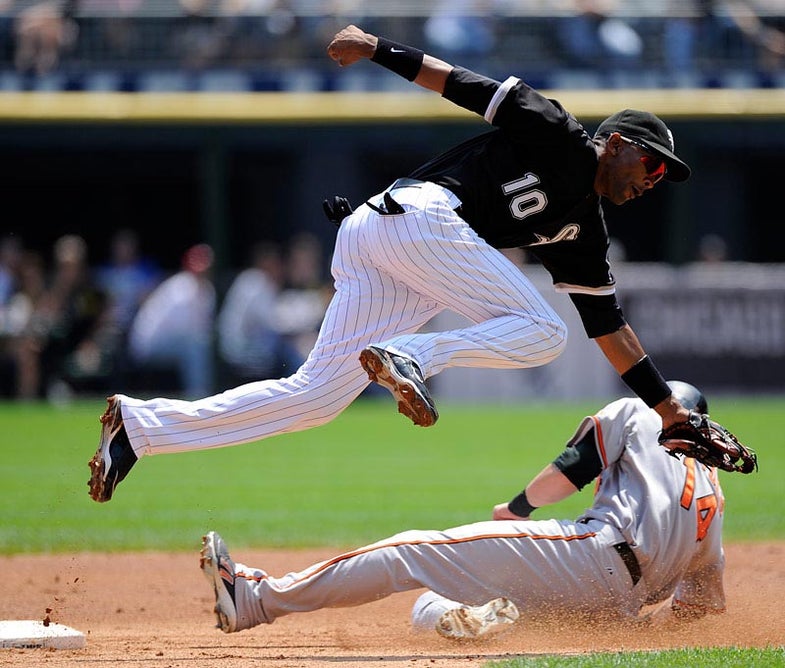
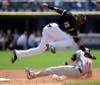
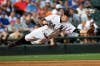
White Sox shortstop Alexei Ramirez leaps over a sliding Oriole player to catch a throw at second base. Ron VeselySHARE
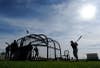
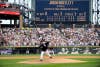
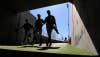
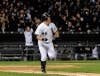
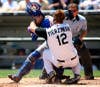
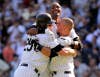
Nick Swisher hams it up with Orlando Cabrera during a cover photo shoot during spring training. Ron VeselyThe White Sox celebrate their 2005 World Series victory with a ticker tape parade in downtown Chicago. Ron VeselyThe World Series trophy is passed along in the White Sox clubhouse after their Game 4 victory in Houston. Ron VeselyWhite Sox players A.J. Pierzynski, Aaron Rowand and Joe Crede celebrate winning the 2005 World Series in Houston. Ron VeselyWhite Sox pitcher Jose Contreras delivers the first pitch of the 2005 World Series to Craig Biggio of the Astros, the first World Series game played in Chicago since 1959. Ron VeselyThe entire White Sox team waits at home plate to greet Andruw Jones after Jones hit a walk-off home run to win the game. Ron VeselyWhite Sox players train early in the morning during spring training in Glendale, Arizona. Ron VeselyWhite Sox pitcher Mark Buehrle delivers the final pitch of his perfect game against the Tampa Bay Rays July 23, 2009. Ron VeselyWhite Sox shortstop Alexei Ramirez leaps over a sliding Oriole player to catch a throw at second base. Ron VeselyWhite Sox players walk in from the practice field after a morning workout during spring training in Glendale, Arizona Ron VeselyWhite Sox designated hitter Jim Thome hits a game-winning home run to win the 2008 AL Central tiebreaker game against the Twins as A.J. Pierzynski reacts in the background. Ron VeselyAlexei Ramirez reacts after hitting a grand slam home run against the Tigers to setup a 2008 AL Central tie-breaking game against the Twins the following day. Ron VeselyWhite Sox third baseman Joe Crede flies through the air to knock down a line drive. Ron VeselyA.J. Pierzynski of the White Sox collides with Cubs catcher Michael Barrett during a White Sox/Cubs interleague game in 2006. Ron VeselyJim Thome, Alexei Ramirez and Nick Swisher celebrate after Ramirez drove in the game-winning run in the bottom of the ninth inning. Ron VeselyWhite Sox starting pitcher Jake Peavy poses for a portrait during spring training. Ron Vesely