On a recent photography cruise to the Galápagos Islands, my group and I had just finished a long walk at Urbina Bay on a successful search for big, yellow land iguanas to photograph. Just before 11 a.m., the sun had broken through the light clouds, and it was obvious that we were finished shooting—the light was simply too harsh.
Or was it?
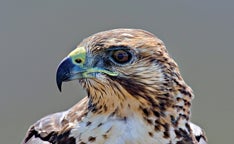
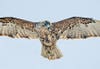
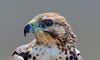
It’s taken as an article of faith that midday sun is simply no good for photography—you might as well use that time for a nap. But I don’t accept that, and neither should you. Had I adhered to this “rule,” I would have never captured the image of the Galápagos hawk.
Here are several strategies for getting good pictures in harsh midday light, all of which can be used for a variety of wildlife—not just birds—and other nature subjects.
Shortly after my traveling companions and I returned from our iguana shoot, several young hawks began hovering over the white sand beach, some landing on driftwood a good distance away. But with that area closed to protect sea turtle nests, we could not get into decent position—we had the sun directly in our faces.
In this case I followed a basic strategy—when the sun is bright, shoot tight—and went with my longest lens plus a teleconverter. By cropping tightly, you can eliminate many of the harsh and distracting shadows in the scene.
Get low, try to move as close to your subject as possible (while always mindful of the welfare of the animal and your own safety as well), and try for as clean a background as possible. If you can get nearer to your subject than the minimum focusing distance of your lens, adding an extension tube will let you focus closer.
Use Strong Backlight
Another strategy for shooting during the harsh hour is to exploit backlight. Keep in mind that on bright, sunny days, a subject backlit by the sun is very evenly illuminated from the front by diffuse ambient light. In the case of the Galápagos hawk photo above, the backlit bird is illuminated by reflection from the white sandy beach below.
The simple rule is to keep your subject on the line between you and the sun to minimize direct sunlight entering the lens. You will almost always need to overexpose from the meter reading to get good detail in your subject: In the hawk photo, I added nearly 2 stops of exposure over the camera’s evaluative meter reading.
When working with backlighting, there will always be some small parts of your subject that will be lit directly by the sun. To make sure you’re not overexposing important detail, enable the highlight warning on your DSLR, generally found in a setup menu. On playback on the LCD, this warning will flash “blinkies” on highlights that are blown out. Remember, though, that some loss of highlight detail may be unavoidable in backlit photos.
After shooting, you can lighten shaded areas in a variety of ways in numerous image-editing programs. A Curves adjustment in Adobe Photoshop is the one I use most frequently. A simpler Photoshop tool for this task is the Shadow/Highlight slider set. It’s easy to overdo filling with the Shadow slider, so be careful.