Sigma 24–70mm f/2.8 EX DG HSM AF: Lens Test

PopPhoto.com
Reviews
Lenses
Sigma 24–70mm f/2.8 EX...

Dramatic improvement at top speed.

By Julia Silber Posted April 10, 2009

Sigma 24–70mm f/2.8. Check out the gallery below for image quality shots.

Gallery Preview

SPECIFICATIONS

24–70mm (24.95–68.56mm tested), f/2.8 (f/3.02 tested), 14 elements in 12 groups. Focusing turns 90 degrees counterclockwise. Zoom ring turns 80 degrees clockwise. Focal lengths marked at 24-, 28-, 35-, 50-, and 70mm.

Diagonal view angle: 84–34 degrees. n Weight: 1.82 lb. n Filter size: 82mm. n Mounts: Canon AF, Nikon AF, Pentax AF, Sigma AF, Sony AF. n Included: Lenshood, softcase.

Street price: $900.

No lens epitomizes Sigma’s new level of competiton with Canon and Nikon better than this 24–70mm f/2.8. When we tested Sigma’s previous 24–70mm f/2.8 in 2002, it sold for $380, a fraction of the price of comparable high-speed glass. This newcomer? $900, street.

The improvements are dramatic. They include a super-quiet HSM autofocus motor, ELD and SLD glass elements to suppress chromatic aberration, three aspheric elements for compactness and reduced aberration, rounded aperture blades for better bokeh, and an internal-focusing design. On APS-sensored DSLRs, the lens scales up to about a
38–112mm full-frame equivalent.

HANDS ON

This solid-feeling lens is much more compact than its predecessor. It’s lighter than the comparable 2-pound Nikkor, but not by much. Focus and zoom rings turn smoothly, easily, and evenly across their ranges. AF is rapid, accurate, and, for all practical purposes, silent.

IN THE LAB

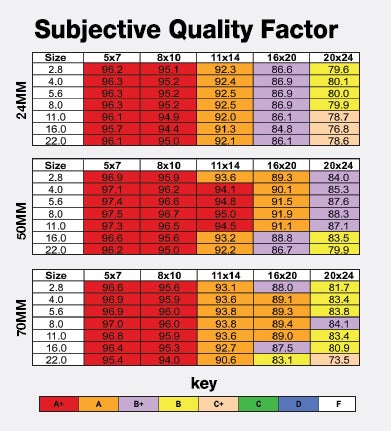
Its Excellent SQF results were drastically superior to the earlier lens, especially at 50mm and 70mm, indicating much more sharpness and contrast. Distortion, according to DxO Analyzer 3.0.1 tests, was also vastly improved, with Visible barreling at 24mm (0.39%), versus Very Visible (1.2%) barrel distortion before. At 50mm pincushioning was Imperceptible (0.09%)—astounding next to the Very Visible (1.5%) pincushion distortion of the earlier lens. Similarly, the new lens showed just Slight pincushioning at 70mm (0.15%) compared with Very Visible (1.8%) pincushion distortion in 2002. This all suggests a complete rethinking of the lens. Light falloff was gone from the edges by f/3.5 at 24mm and 70mm, with no measurable falloff at 50mm. Magnification ratios at the uniform close-focusing distance of 13.4 inches ranged from 1:10.31 at 24mm to 1:5.34 at 50mm, and 1:4.35 at 70mm—disappointing next to the older lens’ 1:3.6 top magnification, but the price of SQF and distortion superiority.

CONCLUSIONS

This top-drawer lens is fast and compact, with a practical focal-length range perfect for many of the subjects covered by event shooters and photojournalists in particular.

  • Print Page Print
  • Stumble Upon Stumble It

Comments

Be the first to comment!

Post a Comment

Comments will not be posted until they are approved.

Visit other Bonnier sites: