Shooting-Talladega-Superspeedway-Bobby-Labonte-s
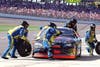
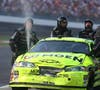
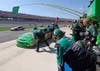
Bobby Labonte’s crew changes four tires and fills the tank. A good pit stop can be done in 14 seconds and often, the pit crew undergoes extreme physical training and has the athletic ability of Olympic-class athletes.
Shooting-Talladega-Superspeedway-Photographers-ca
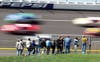
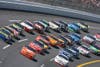
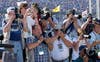
Photographers capture images at Talladega Superspeedway. Located in Lincoln, Alabama, it is a 2.66 mile trioval track and is the largest that NASCAR races on during the 10 month season.
Shooting-Talladega-Superspeedway-NASCAR-driver-El
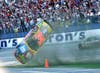
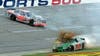
NASCAR driver Elliott Sadler flips end-over-end in the trioval area at Talladega Superspeedway. Sadler walked away from the wreck.
Shooting-Talladega-Superspeedway-Paul-Menard-s-cr
Paul Menard’s crew look with disappointment at a broken radiator during a pit stop needed after a green flag collision at Talladega Superspeedway.
Shooting-Talladega-Superspeedway-Bob-Crisp-s-imag
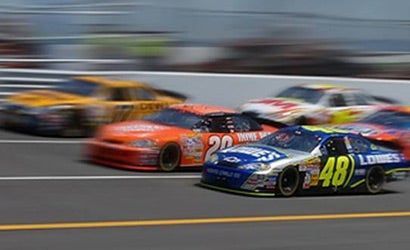
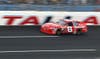
Bob Crisp’s image of Dale Earnhardt Jr., shows the effectiveness of panning to illustrate speed.
Shooting-Talladega-Superspeedway-NASCAR-veteran-d
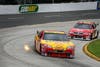
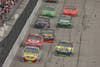
NASCAR veteran drivers Sterling Marlin (40) and Bobby Labonte (18) collide in the trioval section of Talladega Superspeedway in Lincoln, Alabama.
Shooting-Talladega-Superspeedway-Mug-shot-of-Bob
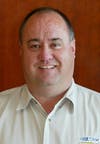
Mug shot of Bob Crisp.
Shooting-Talladega-Superspeedway-A-car-shoots-fla
A car shoots flames at the Martinsville, Virginal Speedway.
Shooting-Talladega-Superspeedway-Speed-can-be-ill
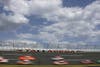
Speed can be illustrated by having all objects within the image still except for the cars traveling the track.
Shooting-Talladega-Superspeedway-Shots-made-from
Shots made from outside the outer retaining walls can be particularly dangerous for the track photographer.
Shooting-Talladega-Superspeedway-Dale-Earnhardt-J
Dale Earnhardt Jr., pits at the Talladega Superspeedway. Shooting the pits from the grand stand photo towers can offer a different view for readers.
Shooting-Talladega-Superspeedway-Spotters-stand-i
Spotters stand in the turn 3 tower at Talladega Superspeedway. Spotters play an integral part in keeping the track safe by being the eyes at the four corners of the track.
Shooting-Talladega-Superspeedway-Using-unusual-te
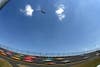
Using unusual technique can often take a photo from average to exceptional. Here, a fish-eye lens is used to shoot the track and the Goodyear blimp.
Shooting-Talladega-Superspeedway-A-portrait-of-Ma
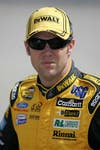
A portrait of Matt Kenseth at a NASCAR track.
Shooting-Talladega-Superspeedway-A-portrait-of-Ju
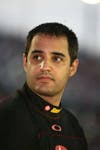
A portrait of Juan Montoya at a NASCAR track.
Shooting-Talladega-Superspeedway-A-speed-shot-at
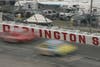
A speed shot at Darlington Raceway.
Shooting-Talladega-Superspeedway-Shooting-from-th
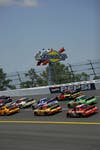
Shooting from the photo towers can give you a vantage point above the fences.
Shooting-Talladega-Superspeedway-A-portrait-of-a
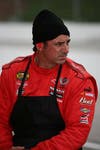
A portrait of a Budweiser pit crew member.
Shooting-Talladega-Superspeedway-Mug-shot-of-Davi
Mug shot of David Griffin.
Shooting-Talladega-Superspeedway-Shooting-pit-act
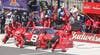
Shooting pit action with a wide-angle lens can give you a more realistic feeling. Here, Bobby Labonte’s crew fills their driver’s tank with gas. A typical NASCAR pit stop is performed in less than 14 seconds.
Shooting-Talladega-Superspeedway-The-group-mental
The group mentality continues in Victory Lane and there are often more photographers than space to shoot.
Shooting-Talladega-Superspeedway-Jeff-Gordon-reac
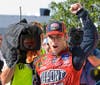
Jeff Gordon reacts to his win at the Talladega Superspeedway Victory Lane. Reaction can be telling in a still photo and is often the most coveted aspect of a photo for the working photojournalist.